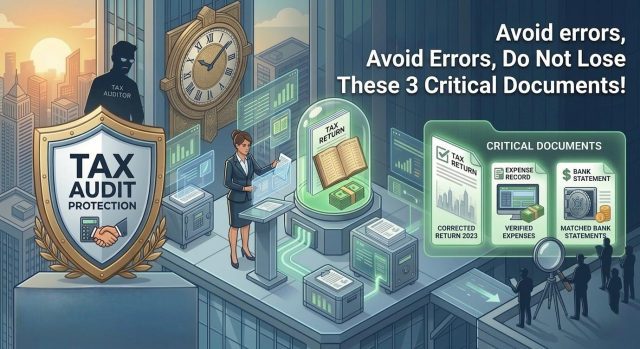
As a business owner, you might think that the success of your company depends solely on increasing sales or expanding operations. However, another equally important aspect is proper handling of taxes. Many companies encounter major problems during a tax audit, not because of deliberate violations, but due to simple corporate tax errors in organizing documents or keeping essential records.
In many cases, losing important documents or failing to properly document certain transactions can result in expenses being treated as income, which increases the tax owed and may lead to unexpected corporate tax penalties. This is why many business owners look for clear ways to understand how to avoid tax issues in companies before small mistakes turn into significant losses.
In this article, we reveal 3 essential documents auditors may request at any time, and the absence of these could cost your company thousands of dollars. Reading this article can help you protect your business from common errors that many business owners make.
Tax Invoices for Expenses: The Essential Proof of Spending
Corporate tax invoices are among the most important documents any company must keep organized, as they serve as official proof of expenses incurred during business operations. In many tax auditcases, an expense will not be recognized unless it is supported by clear and accurate invoices. Losing these invoices may lead to those expenses being treated as taxable income.
Many business owners wonder how to document expenses in tax returns properly. The answer is simple: every expense should be backed by a tax invoice detailing the transaction, including the supplier’s name, transaction date, amount, and type of service or product. This information helps tax authorities verify that the expenses are legitimate and related to business activities.
Moreover, the importance of contracts and invoices in taxation goes beyond proving expenses; it also protects the company from financial disputes or questions that may arise during financial reviews. When invoices are organized and stored properly, it becomes easier to trace cash flow and prove that expenses are genuinely tied to company operations, reducing the likelihood of increased taxes or unexpected corporate tax penalties.
Contracts with Clients: Legal Proof of Payments
Contracts are just as important as invoices in organizing a company’s financial matters. A contract outlines the agreement between the company and the client, specifying the service or product, payment amounts, and payment terms. Without a clear contract, a company may struggle to justify certain payments during an audit.
In many cases, payments without a written contract are considered corporate tax errors that may raise questions with tax authorities. Large amounts appearing in a bank account without documentation may be treated as unexplained income and added to taxable profits.
This highlights the importance of contracts and invoices in taxation. Having a clear contract shows the reason for the payment and the nature of the service provided, helping the company demonstrate that these funds are part of organized business transactions. Retaining contracts also makes it easier to explain financial movements during a tax audit and reduces the likelihood of facing tax issues or corporate tax penalties.
Bank Statements: The Key Reference for Matching Revenues and Expenses
A bank statement is an essential document relied upon by tax authorities during a financial review. During a tax audit, auditors not only check invoices and contracts but also compare these documents with actual bank transactions to ensure consistency. Therefore, a bank statement is considered one of the corporate tax authority requirements that clarify incoming funds and outgoing payments.
In many audit cases, problems arise when bank deposits do not correspond with invoices or contracts. At this point, authorities may request additional clarification, prompting many business owners to ask: what are the required documents for a tax audit and how can they be properly organized?
Having an organized bank statement that matches invoices and contracts helps present a clear picture of financial transactions. When money movements are documented and understandable, it becomes easier to explain any financial activity during the year, reducing the likelihood of problems during a tax audit or treating some funds as unverified income.
HFA Services: Your Trusted Partner for Tax Returns and Avoiding Costly Mistakes
With increasing tax requirements and complex accounting procedures, many business owners struggle to organize documents or submit tax returns correctly. This is where HFA services step in, offering professional support to help companies manage tax obligations confidently and efficiently.
At HFA, we assist companies in preparing and submitting tax returns accurately and in compliance with corporate tax authority requirements, ensuring proper organization of invoices, contracts, and bank statements. This not only ensures accurate filing but also minimizes corporate tax errors that could result in penalties or unexpected audits.
Our services include reviewing financial records, verifying documentation of expenses and revenues, and preparing companies for potential tax audits by organizing required documents for a tax audit in advance. Our goal is to allow business owners to focus on growing their companies while we handle tax matters professionally.

Frequently Asked Questions
1. When might a company face a tax audit?
A tax audit can occur randomly or when discrepancies are noticed in financial data or tax returns. Sometimes, companies are selected as part of routine audits conducted by tax authorities.
2. Can small businesses undergo a tax review?
Yes, company size does not prevent a review. Even small or startup companies may be audited if they are registered and submit regular tax returns.
3. How long should a company keep its financial documents?
It is generally recommended to retain financial documents and records for several years according to tax regulations, as authorities may request to review them anytime during that period.
4. Can a tax return be amended after submission?
In some cases, a tax return can be amended if an error is discovered, depending on applicable laws and procedures set by the tax authority.
5. Does hiring a tax expert help reduce tax risks?
Working with a tax or accounting specialist helps companies better understand their tax obligations and organize financial data to minimize corporate tax errors and potential issues.
______________________________________________________________________________________________________________________________________
You may also be interested in

What Does Establishing an Offshore Company Mean, and Why Might It Be the Right Choice for You?
Cash Flow Management: The Complete Guide for Entrepreneurs to Avoid 82% of Business Failures