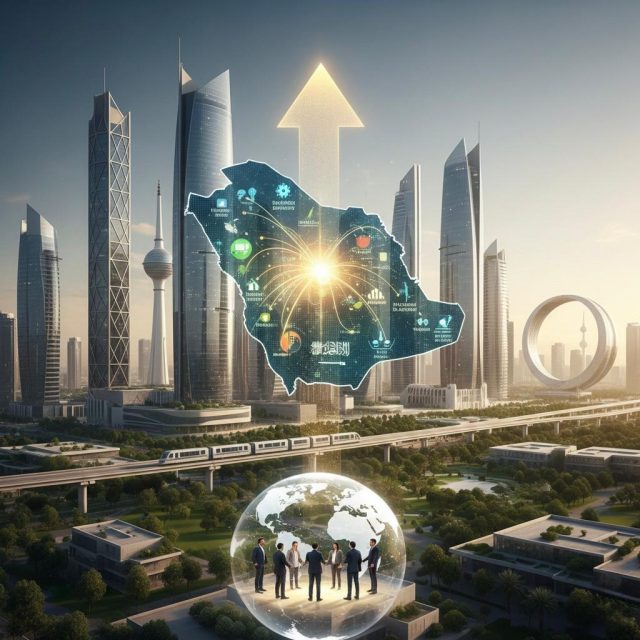
In 2026, investment in Saudi Arabia 2026 is no longer just a collection of numbers or economic reports. It has become a real transformation that investors experience before they even read about it. Today, the Kingdom of Saudi Arabia is sending a clear message to the world: opportunities exist, doors are open, and the future is being built now, not later.
Amid this transformation, many investors are asking: why is investment in Saudi Arabia attracting so much attention at this specific time? And what makes the investment environment in Saudi Arabia one of the most attractive destinations for capital in the region and globally?
With the rapid and ambitious steps of Saudi Vision 2030, the Kingdom is no longer focused solely on attracting investment, but on creating a different investment experience—more transparent, more stable, and built on trust. Are we witnessing a new phase that is redefining investment in the Middle East? And is 2026 the year when opportunities move from promises into tangible reality?
Between continuous reforms, carefully planned openness, and limitless ambition, the Kingdom of Saudi Arabia stands out as a destination full of long-term growth potential. The most important question now is: is it time for you to be part of this transformation?
What Does Investment in Saudi Arabia 2026 Mean for Local and Foreign Investors?
Investment in Saudi Arabia 2026 means that the investment environment in Saudi Arabia is no longer based on expectations, but on official decisions that are actively reshaping the market.
At the beginning of 2026, the Capital Market Authority of the Kingdom of Saudi Arabia announced the full opening of the financial market to all categories of foreign investors, removing the previous qualification requirements that restricted direct access. This decision, which comes into effect in February 2026, represents one of the most significant regulatory shifts in the history of the Saudi stock market. It allows foreign investors to directly access the Saudi stock market and participate more broadly in its growth.
This openness is not an isolated step, but part of a clear economic path that reflects the Kingdom’s commitment to enhancing confidence, increasing liquidity, and expanding the investor base, all within the broader transformation led by Saudi Vision 2030. Today, the question is no longer whether Saudi Arabia is open to investment, but how investors can benefit from this new phase.
What Are the Most Important Changes in Investment Regulations in Saudi Arabia in 2026?
Investment in Saudi Arabia 2026 represents a pivotal phase in terms of regulations and legislation. The investment environment in Saudi Arabia has shifted from a selective and restrictive framework to a more open and flexible model aimed at expanding the investor base and strengthening confidence among both local and foreign capital.
These changes are not cosmetic; they are the result of official decisions that have reshaped how investors enter the market and established new foundations for investment as a key driver of economic growth.
The most important changes implemented in 2026 include:
• Full opening of the Saudi financial market to all categories of foreign investors without prior qualification or classification requirements.
• Removal of restrictions that previously limited foreign direct investment in the Saudi stock market.
• Simplification of regulatory procedures and reduction of bureaucratic requirements related to market entry.
• Strengthening transparency and market governance in line with international standards.
• Supporting market liquidity and expanding the investor base, positively impacting market stability and long-term growth.
Which Sectors Are the Most Attractive for Investment in Saudi Arabia 2026?
Investment in Saudi Arabia 2026 is characterized by clear sectoral diversity, driven by economic reforms and regulatory openness that have expanded opportunities for both local and foreign investors. This diversity goes beyond a single sector and offers multiple opportunities that combine growth with stability.
The most attractive sectors include:
• Investment in the Saudi stock market, especially with increased liquidity, broader investor participation, and a wider range of listed companies.
• The industrial sector, particularly manufacturing industries and export-oriented supply chains.
• Renewable energy and clean technology, as part of the Kingdom’s long-term economic transformation.
• Tourism and entertainment, supported by mega-projects and expanding infrastructure.
• Technology and innovation, including artificial intelligence and digital services.
How Can a Foreign Investor Start Investing in Saudi Arabia?
Entering the Saudi market is no longer as complex as it once was. Today, investment in Saudi Arabia 2026 offers a real opportunity for investors seeking a stable, growing, and open market. However, success depends not only on opportunity, but on making the right decisions and following a clear, structured path.
Practical steps to start investing include:
• Defining the appropriate type of investment, whether through the Saudi stock market, company formation, or direct commercial activity.
• Choosing the most suitable legal structure in compliance with Saudi regulations.
• Completing licenses and regulatory requirements accurately and without delays.
• Opening bank accounts and legally linking them to the investment activity.
• Entering the market with confidence, supported by a clear understanding of obligations and opportunities.
Here lies the critical factor: relying on a trusted partner. The market contains many regulatory details that can confuse investors at the early stages, and incorrect decisions may cost time and capital.
At HFA Firm in Saudi Arabia, we do more than provide theoretical advice. We establish companies from start to finish. With experience in founding more than 1,000 successful companies for local and foreign investors, we support our clients at every step—from idea, to establishment, to full market entry in the Kingdom of Saudi Arabia.
If you are seriously considering entering the market or want to understand your best options before making a decision, we invite you to contact us.
We offer a free consultation to help you clearly understand your opportunities, choices, and the most suitable next step with confidence.
Frequently Asked Questions
Can a foreign investor own 100% of a company in Saudi Arabia?
Yes, current regulations allow foreign investors to own 100% of a company in many activities, subject to specific conditions and the licensed activity.
How long does it take to establish a company in Saudi Arabia for a foreign investor?
The timeframe varies depending on the activity and legal structure, but it has become significantly shorter compared to previous years when requirements are completed correctly.
What is the minimum capital required for investment in Saudi Arabia?
There is no unified minimum. Capital requirements depend on the nature of the activity, and some activities do not require a high minimum capital.
Is a physical office required to establish a company?
In most cases, yes. However, flexible solutions such as virtual offices are allowed for certain activities under approved regulations.
Do requirements differ between investing in the Saudi stock market and company formation?
Yes. Investment in the Saudi stock market follows capital market procedures, while company formation requires different licenses and regulatory steps depending on the activity.
Can investors receive consultation before making an investment decision?
Absolutely. Consultation is a crucial step to understand available options and define the most suitable investment path before starting.
_________________________________________________________________________________________________________________________________________
You may also be interested in

Reasons for Saudi Premium Residency Rejection: How to Ensure an Error-Free Application
Premium Residency in Saudi Arabia: Nitaqat Exemption for 3 Years and How to Build Your Startup
How a Foreign Entrepreneur Can Obtain the Entrepreneurship License in Saudi Arabia in 2025