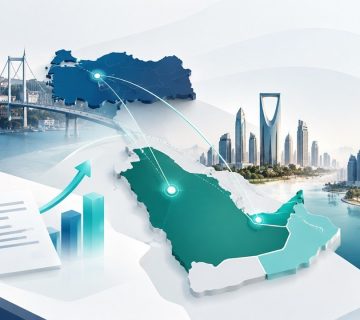
Anyone thinking about Entering the GCC market often asks the same question: where do I begin? Should I focus on the product and marketing first, or should I first look for the most suitable country? Are all GCC countries really offering full foreign ownership now? And what about residency—does it come with company formation, or is it a completely separate matter?
At first glance, the answer may seem simple, but the reality is slightly different. Choosing the country, understanding regulations, and determining the right legal structure can make a huge difference between a successful start and an unexpected set of challenges. That is why, before taking any step, it is essential to look at the full picture and understand what truly fits your situation—not just what is commonly assumed.
Why is everyone thinking about Entering the GCC Market?
The reason is simple: Entering the GCC market has become easier and more attractive than before, but it now requires deeper understanding rather than just the idea of “starting a business.”
First, the region has undergone a major economic transformation, especially in terms of foreign investment laws. Several GCC countries now allow 100% foreign ownership in many activities, which has completely changed the rules of the game.
Second, the business environment has evolved rapidly—government facilitation, digitalized procedures, and strong support for foreign companies have all made establishment faster and less complex than in the past.
Before Company Formation in the GCC: Where is your audience first?
Before you consider Company formation in the GCC or choose a country, ask yourself a simple question: where are your customers actually located?
If your audience is concentrated in a specific country, this alone can determine your direction. In most cases, the decision comes down to Saudi Arabia or the UAE, and the reason is clear: market size and high purchasing power.
Saudi Arabia gives you access to a large population and growing demand, while the UAE offers a flexible business environment and easy access to multiple markets.
In short, do not start from “what is easiest,” but from “where are my customers.” This single decision can save you a lot later.
Company formation in the GCC does not necessarily mean residency
The second important question before Company formation in the GCC is: do you intend to live and relocate to the country?
Many people overlook a critical point: the authority that issues your business license is not necessarily the same authority that grants residency. This means you can legally establish a company, but later discover that you are not eligible for residency based on your status or nationality.
This actually happened with one of our clients. He proceeded with Company formation in Saudi Arabia, prepared financial statements, received approval from the Saudi Ministry of Investment, and everything seemed correct. However, he later found out that he could not obtain residency because he did not previously hold a valid residency status, and this point was not clarified to him from the beginning.
The result? A registered company with ongoing costs, but no practical ability to fully benefit from it.
That is why you should never separate establishment from residency—ignoring this can become costly.
If you decide on Opening a company in the GCC: what legal structure suits you?
When thinking about Opening a company in the GCC, choosing the country alone is not enough. You must also define the correct legal structure according to each jurisdiction.
If you move toward Company formation in Saudi Arabia, the process is not as straightforward as many assume. For service-based activities, you often need an external foreign company with audited and profitable financial statements, then apply through the Saudi Ministry of Investment. Establishing a company directly under your personal name is not possible in most cases, except under special conditions such as premium residency.
If you are considering Company formation in the UAE, the key question is: should you choose Mainland or one of the Free zones?
Mainland is suitable if your goal is the local market, while Free zones offer tax advantages but come with specific conditions depending on the activity and jurisdiction.
In short, choosing the legal structure is not a secondary detail—it is a decision that defines how your entire business will operate.
How HFA Firm can help you with Entering the GCC Market
At HFA Firm, we help you start the right way from the very first step until full operation.
We provide tailored consultations to determine the best country for you, whether you are considering Saudi Arabia or the UAE, based on your business activity and target audience.
We also handle the full Company formation in the GCC process—from obtaining licenses, preparing documentation, and dealing with government authorities, to selecting the most suitable legal structure for your business.
Most importantly, we give you the complete picture before you start—including residency implications, costs, and requirements—so you do not face unexpected surprises later.

Frequently Asked Questions
1. Can I open a company in the GCC without being physically present in the country?
Yes, in some cases you can complete company setup remotely depending on the country and business activity, but certain procedures or banking steps may require later presence.
2. How long does Company formation in the GCC usually take?
It varies by country and procedures, but it generally ranges from a few days to several weeks if all documents are complete.
3. Can I change the company activity after establishment?
In most cases, yes. However, it requires official approvals and license updates depending on the relevant authority.
4. Do I need a local bank account immediately after Company formation in the GCC?
Not always immediately, but a bank account is eventually necessary to operate and receive payments officially.
5. Do costs vary significantly between countries?
Yes, costs differ significantly depending on the country, license type, and jurisdiction (especially between Free zones and Mainland).